
What's so great about coloured gemstones?
My thoughts on the matter
Talitha-Grace, MSc FGA
3/7/20263 min read
What's so great about coloured gemstones?
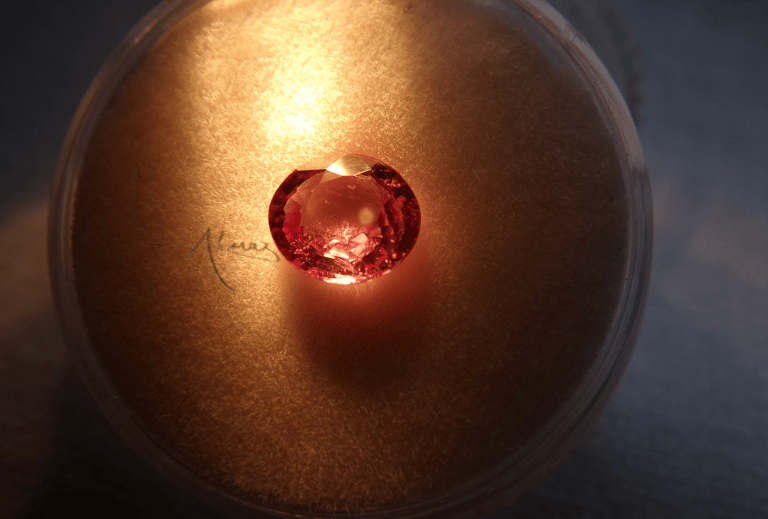
Everything: In coloured gemstones we can see the artistry of nature, from the seemingly infinite range of colours to the varying reflection and refraction of light; not to mention the organic motifs that occur depicting the macrocosm in the microcosm. There is nothing not to love about gemstones. Primarily we use them for adornment in jewellery pieces with the most highly sought after being precious stones such as diamonds, emeralds, rubies and sapphires. In truth, there are so many more beautiful stones outside of the well known favourites which make excellent choices for all manner of rings, pendants, bracelets and earrings to complement your outfit. In this blog, I will be sharing with you some of my favourite unique gems and explaining what's so great about each of them. On a broad level, I outline below some of what I have found captivating in my journey to find out more about gemstones.
Colour
The colour that we see in gemstones is, at a high level, a result of the absorption of visible light by the gemstone. Different gemstones absorb different wavelengths of visible light and this absorption varies due to numerous known and unknown factors. The known factors include the chemical composition, physical structure and internal chemical bonds which in combination create an atomic level vibration that interacts with incident electromagnetic energy (visible light in the case of colour). The visible light spectrum consists of wavelengths ranging from 400nm to 700nm and the colours are violet, blue, green, yellow and red but the electromagnetic spectrum is much more than that from gamma rays to radio waves. We are in a soup of electromagnetic energy vibrating at various frequencies where all things in it either absorb, refract, reflect or transmit that energy. Studying gemstones allows us to consider the world around us from a unique but ultimately universal perspective.
Lustre
Lustre is the quality and quantity of reflected light from the surface of a stone. It is caused by, like colour, the chemical composition and physical structure of a stone amongst other factors. It can be described as adamantine which means diamond like, sub-adamantine, vitreous which means glassy, waxy, oily, dull or bright. Adamantine lustre is the highest quality, it is bright and the reflection of light from the surface can be striking which enhances the colour and refraction of light within the stone.
One of the most interesting types of lustre is the oily lustre which seems to be unique to peridot, a magnesium iron silicate mineral from the olivine family. The way that light is reflected from the surface of this stone, causes it to appear wet with oil – this is a naturally occurring 'trick' of light.
Formation
The journey of a gemstone coming into existence in the form you see can be viewed as a miraculous adventure consisting of a series of conveniently timed, necessary events. In truth, all things in nature can be described this way but in a way gemstones are amongst the most curious expressions of nature's energy. For example, an interesting story of formation lies in obsidian which is a naturally formed glass as a result of magma that cools down quickly on the surface of the earth. Due to the fast rate of cooling, the silicon and oxygen molecules do not get a chance to crystallize and form an orderly 3D structure, they just arrange themselves randomly. However over time, within the obsidian, 'snowflakes' occur, which are areas of crystallisation occurring within an amorphous environment. The silicon and oxygen molecules re-arrange themselves over time to become cristobalite and there are theories on what triggers this process. Eventually, over time, all obsidian will transform into cristobalite which is fantastic evidence of nature's tendency toward order. There are so many more interesting formation stories which I will get into as this blog continues.